Adaptive Training Run
Adaptive training runs are a variation of linear training runs. The main difference is that in adaptive training runs, the content of the training is not fixed and can be changed based on the trainee’s behavior in the training. Disadvantage of adaptive training runs as opposed to linear training runs is that they do not offer hints and visualization options are less verbose.
Questionnaire Phase#
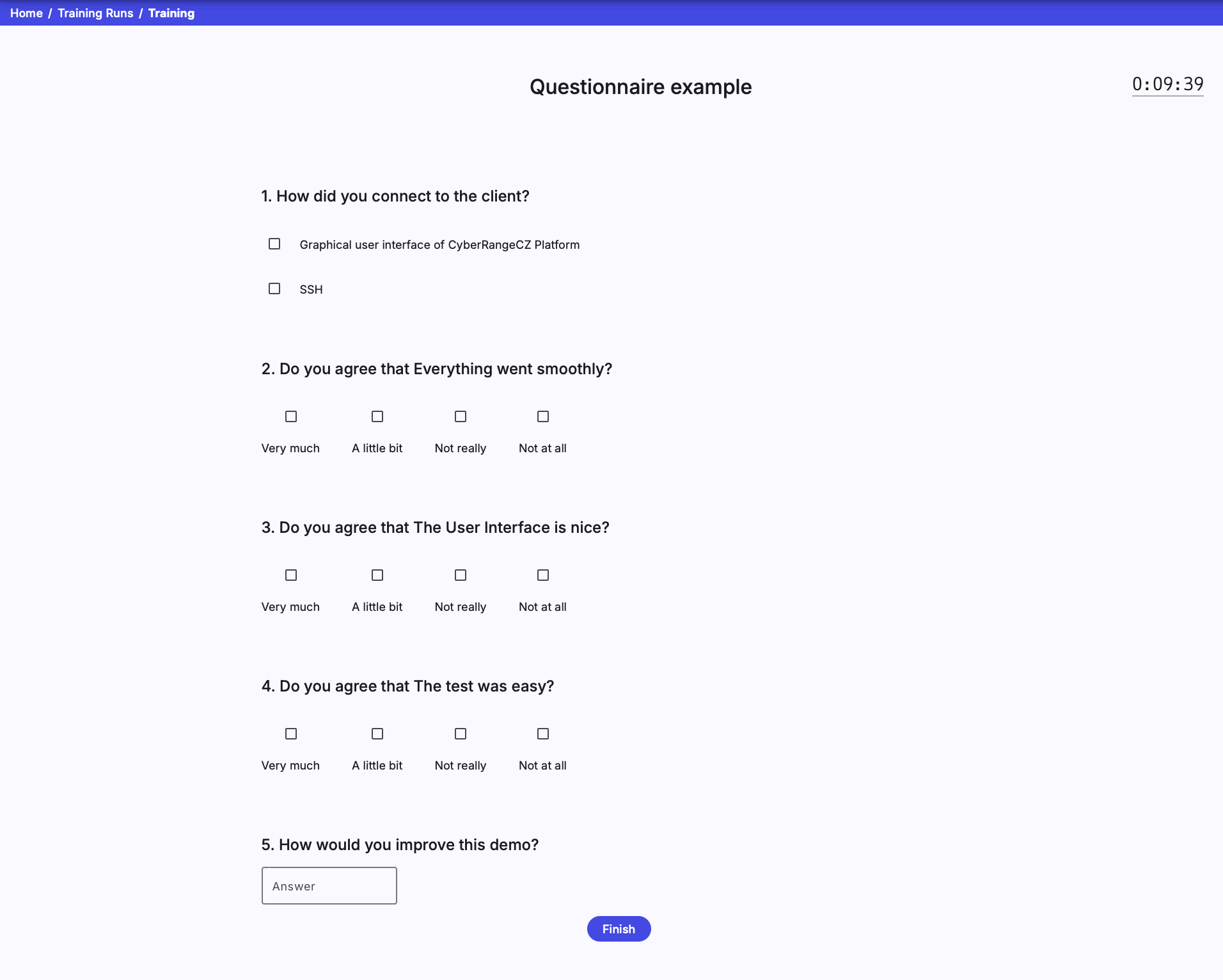
Questionnaire phases are the adaptive training’s alternative to the linear training’s assessment level. The main purpose of the questionnaire phase is to assess the trainee’s knowledge and skills before they start training. The collected information can then be used to select the content for training phase and provide the trainee with a personalized training experience.The questionnaire can also be used to gather feedback after the training.
At the questionnaire phase, a trainee must answer the different types of questions. Questions that are left blank are considered to be wrongly answered.
There are three types of questions:
- Free Form Question (FFQ): Trainees are asked to provide the text answer to the predefined field.
- Multiple Choice Questions (MCQ): Trainees are asked to select only correct answers from the choices offered as a list.
- Rating Form Questions (RFQ): Trainees are asked to choose one option from a spectrum.
Training Phase#
Training phase is the adaptive training’s alternative to the linear training’s training level. The main difference between the training phase and the training level is that in the training phase, the content of the training is not fixed and can be changed based on the trainee’s behavior in the training. To read more about adaptive training content selection, see the advanced guide.
Training Run Results#
When the trainee finishes a training run, they will see the visualization of their behavior in training. The visualization is described in detail in Visualizations for Adaptive Training.